Lock change in Saint-Constant
In Saint-Constant, locks are mostly changed on a house someone has just bought. The technician first checks whether rekeying would do, then fits the part that really suits the door.
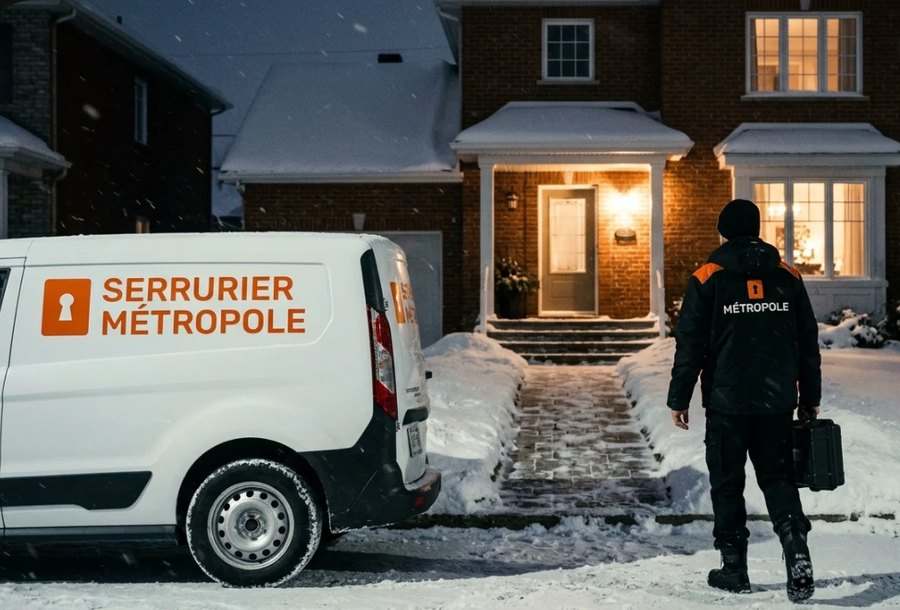
In Saint-Constant, most households own their house, and the decision to change a lock almost always falls to the person living there. The real question is elsewhere: what to change, on which door, and why. A good share of the town's houses are already decades old, from the village of rue Saint-Pierre to the streets of montée des Bouleaux. Many locks have therefore seen more than one owner, and sometimes more than one lost key ring.
A house from the 1960s to the 1980s changing hands
Houses north of montée des Bouleaux go back mostly to the 1960s, and those in the strip just south of Route 132 mostly predate the mid-1980s. At purchase, nobody can say how many keys went around: children grown up, the snow-removal contractor, a neighbour who kept the cat, a roofer. The guide on rekeying or replacing in a new house helps you sort it out door by door.
In these houses a change is also a chance to fix what the eye does not see. A strike plate screwed into the trim alone with two-centimetre screws gives way at the first shoulder. The technician fits the new lock with screws that bite into the framing and, on an exposed door, a reinforcement plate. He also checks the throw of the deadbolt: a bolt that does not extend fully is nearly useless.
Duplexes, triplexes and row houses: which door is yours?
Since the early 2010s, a good part of Saint-Constant's new housing has been stacked row houses, duplexes and triplexes. The area north of montée Saint-Régis, near the gare Sainte-Catherine, has many, and the northern part of rue Saint-Pierre is densifying in turn on former garage lots, not far from the boulevard Monchamp shopping hub.
In a building like that, at least two locks concern you: your unit's and the shared entrance. In a condo, the second belongs to the board. If you rent, the Tribunal administratif du logement (TAL) states that neither tenant nor landlord may change the dwelling's locks without the other's consent; check your own situation, and read the guide for a tenant who wants to change the lock. On the hardware side, the technician picks a lock that reuses the existing bores, so as not to alter a door identical to your neighbours'.
L'Héritage de Roussillon and homes delivered new
The l'Héritage de Roussillon development, laid out in several phases, is among the neighbourhoods where people move into a home nobody has lived in. The locks feel secure. Yet during the months of construction and then sale, keys may have passed through many hands: subcontractors, inspectors, brokers, finishing crews.
If the locks supplied are decent, rekeying the cylinders makes those keys useless. If they are of minimal quality, or if you want a higher ANSI grade lock on the entry door, full replacement is done in the same visit. Also count the secondary doors: the inside door from the garage and the back-yard door often come with cylinders that do not share a key with the front entrance. It is the right moment to bring everything to a single key, if the cylinders allow it.
In the village, keep the door and change the mechanism
On the southern part of rue Saint-Pierre, near montée Lasaline, where the town's oldest houses stand, the door itself is often worth keeping. If it still has a mortise lock, the technician looks for a case of the same dimensions so as not to cut the wood further. If a cylindrical lock was fitted later, he checks that the old holes are properly covered by the new plate.
The exact arrival time is given on the phone. To understand the measurements and lock types, the general page on lock change covers each case. If you are also locked out, the page on being locked out in Saint-Constant explains the opening, and the page of the locksmith in Saint-Constant presents the other work offered in town.
Also in Saint-Constant
The service in detail, across the region: lock change.
The same service in nearby areas
Common questions
I am buying a 1970s house south of Route 132. Do I have to change every lock?
Not necessarily. The technician examines each door: a solid lock is rekeyed, while a tired or entry-level lock on the main door is replaced. What matters is that no key held by the previous owner still opens any of your doors, the garage and the patio door included.
I own a unit in a triplex in the west of town. May I change the lock on my door?
Read your declaration of co-ownership first, or ask the condo board: the unit door is often your responsibility, the shared door almost never. Our guide on condos and the board's rules explains what to check before choosing hardware.
My new house was delivered with new locks. Why touch them?
Because new does not mean unknown: keys may have circulated during the build and the sale. Rekeying often settles it at lower cost; a change is justified if you want another lock, a sturdier one or a keypad.